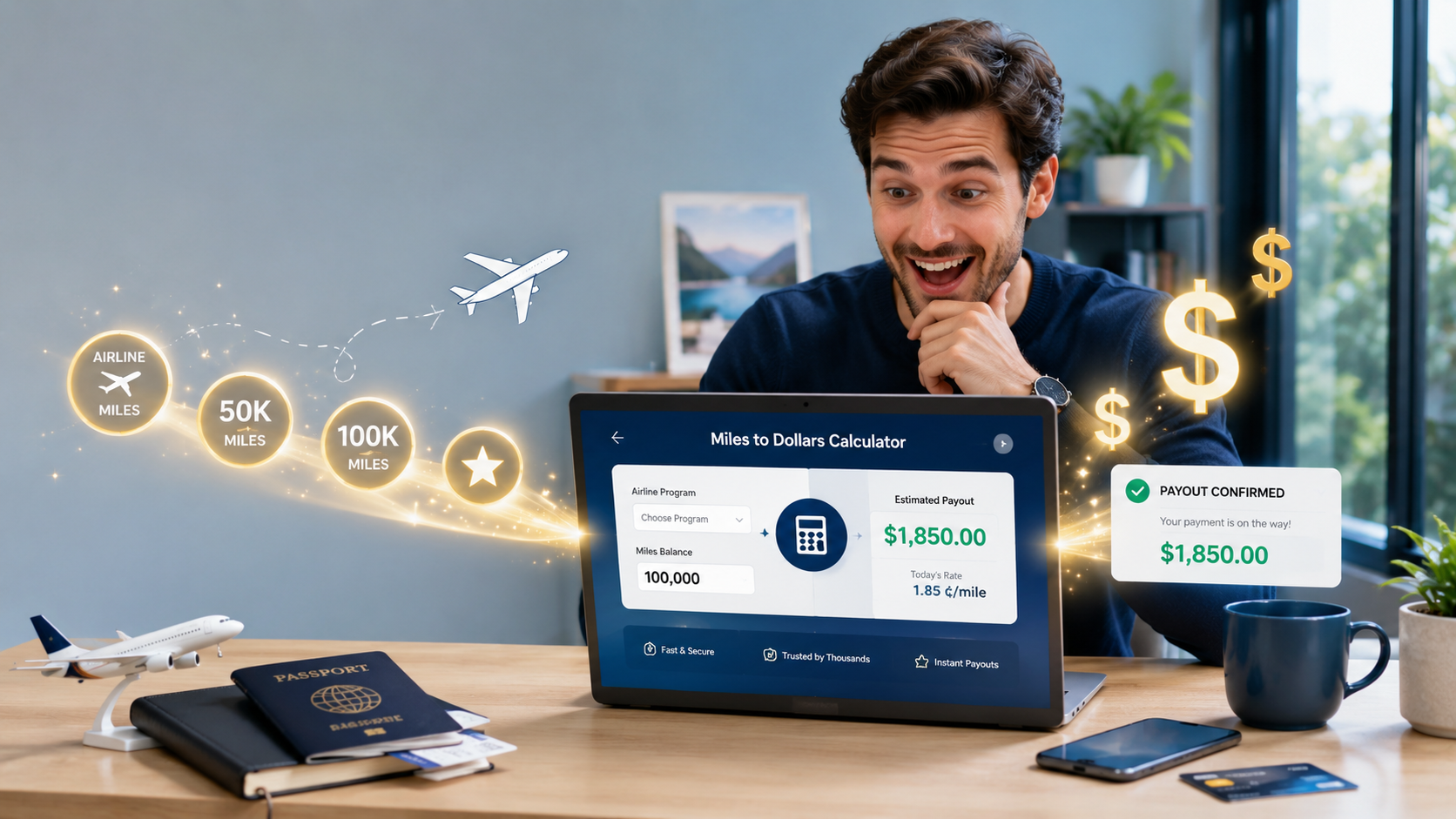
Selling Airline Miles in 2026: A Safe Guide to Turning Miles Into Cash

by admin
If you have thousands of airline miles sitting in a frequent flyer account with no immediate travel plans, keeping them indefinitely may not be your only option.
Some travelers choose to convert unused airline miles into cash rather than hold them for a future redemption that may never happen.
The important part is not simply finding someone willing to buy your miles. It is understanding the process, the loyalty-program rules involved, how payment works, and what information you should — and should not — provide during a transaction.
Selling miles should be approached as a financial transaction, not an informal exchange with an anonymous buyer.
This guide explains what to consider before selling airline miles in 2026 and how to reduce unnecessary account and payment risks.
Quick Answer: What Should You Know Before Selling Airline Miles?
Before proceeding, remember these five points:
- Check your airline’s loyalty-program terms. Many major airlines restrict or prohibit unauthorized sale or barter of miles or awards. United and Delta expressly prohibit this activity in their current program rules, and American also restricts commercial sale or barter involving AAdvantage mileage and awards.
- Know exactly what you are being paid. Get the quote, payment method and transaction requirements clearly explained before proceeding.
- Protect your account information. Never provide access to your email account, recovery codes or unrelated financial accounts.
- Use an established service. Look for identifiable contact information, an established operating history and transparent transaction procedures.
- Do not judge an offer on price alone. Security, payout reliability and support can matter as much as the headline rate.
MileageSpot currently describes its process as submitting your information, completing verification and receiving payment, with PayPal used for airline-mile payouts.
Why Do People Sell Airline Miles?
Airline miles can be valuable, but their practical value depends on whether you can actually use them.
A balance of 100,000 miles may look impressive on a dashboard, but it does not automatically equal a specific dollar amount. Redemption rates can vary based on the airline, route, dates, cabin class and available award inventory.
People commonly consider selling miles for several reasons.
1. They Have No Upcoming Travel Plans
If you have accumulated miles through years of flights or credit card spending but no longer travel regularly, those rewards may remain unused for a long time.
Converting them into cash may be more useful than waiting for a future trip.
2. Award Availability Doesn’t Fit Their Plans
Finding a good mileage redemption is not always simple.
The flight you want may require more miles than expected, award seats may be unavailable, or the itinerary may not make sense for your schedule.
3. They Prefer Cash Flexibility
Miles usually have limited uses.
Cash does not.
Instead of limiting the value of your rewards to airline tickets, upgrades or loyalty-program partners, cash can be used for everyday expenses, investments, travel or anything else.
4. They Have More Miles Than They Expect to Use
Frequent flyers and high-spending credit card users can sometimes accumulate rewards faster than they redeem them.
In that situation, selling part of a balance may be worth considering.
Is Selling Airline Miles Legal?
This question needs more nuance than a simple yes or no.
There is an important distinction between what the law permits and what an airline’s loyalty-program agreement permits.
MileageSpot states that there is generally no federal or state restriction on the sale or barter of frequent flyer miles, while identifying Utah as an exception. However, applicable law can depend on jurisdiction and circumstances, so sellers should not treat a general statement as individual legal advice.
The clearer issue is airline policy.
Major loyalty programs commonly restrict the commercial sale, barter or unauthorized transfer of mileage-related benefits.
United’s MileagePlus rules expressly prohibit the sale or barter of mileage and awards. Delta similarly states that the sale, barter, gift or assignment of SkyMiles miles or mileage awards outside Delta-authorized mechanisms is prohibited. American Airlines also identifies unauthorized purchase, sale or barter involving AAdvantage mileage and awards as prohibited commercial activity.
That means:
Something not being a criminal offense does not automatically mean it is permitted under your airline’s loyalty-program agreement.
Before selling, review the current terms governing your specific frequent flyer program and understand the potential consequences.
What Can Happen If an Airline Flags a Transaction?
Airline loyalty programs generally reserve significant discretion when enforcing their rules.
Depending on the program and circumstances, potential consequences can include:
- Account review.
- Temporary account restrictions.
- Cancellation of an award.
- Removal of miles or benefits.
- Suspension or termination of loyalty-program membership.
This is why sellers should understand the program rules before making a decision rather than treating miles exactly like cash sitting in a bank account.
Your loyalty balance exists within a program governed by the airline’s membership agreement.
How Much Are Your Airline Miles Worth?
There is no reliable universal cash rate for airline miles.
Be cautious with articles claiming that every mile is worth a fixed amount such as 1.2 cents or 1.8 cents.
Pricing can vary according to:
- Airline loyalty program.
- Number of miles available.
- Market demand.
- Award availability.
- Current loyalty-program rules.
- Transaction requirements.
- Timing.
A quote for 50,000 United MileagePlus miles does not necessarily tell you what 50,000 Delta SkyMiles, Air Canada Aeroplan points or Emirates Skywards miles are worth.
This is why getting a program-specific quote provides a more realistic benchmark than applying a generic cents-per-mile estimate.
Rate Isn’t the Only Number That Matters
Suppose one buyer offers slightly more money but provides unclear payment terms, poor support and no verifiable business information.
Another offers a slightly lower rate but provides a documented process, established payment method and responsive support.
The second offer may represent the better transaction.
Evaluate the complete deal:
Net payout + reliability + security + process transparency
rather than:
Highest advertised rate only
How to Sell Airline Miles More Safely
There is no way to eliminate every risk associated with a transaction that may conflict with a loyalty program’s terms.
You can, however, reduce unnecessary security and payment risks.
1. Review Your Airline’s Current Program Rules
Do this before comparing buyers.
Check whether your program permits:
- Transfers.
- Gifting.
- Award bookings for other travelers.
- Sale or barter.
- Third-party account access.
Terms can change, so relying on an old Reddit discussion or several-year-old blog post is not sufficient.
Use the airline’s current terms as your source of truth.
2. Verify Who You Are Dealing With
Do not send sensitive account information simply because someone offers an attractive price.
Look for signals such as:
- Established website.
- Identifiable company.
- Real customer-support channels.
- Published contact information.
- Independent customer reviews.
- Clear explanation of how the transaction works.
- Transparent payment process.
MileageSpot’s website currently lists customer support information, reviews, program-specific selling pages and a defined three-step selling process.
3. Get the Quote Before Proceeding
You should know what you are agreeing to.
Confirm:
- Which mileage program is involved.
- Number of miles being sold.
- Total amount you will receive.
- Payment method.
- When payment is issued.
- What verification is required.
- What happens if the transaction cannot be completed.
Avoid arrangements where these details remain vague.
4. Protect Your Email and Recovery Accounts
Your frequent flyer account and your email account are not the same thing.
Never provide:
- Email account password.
- Banking password.
- Email recovery codes.
- Unrelated financial credentials.
- Access to other loyalty accounts not included in the transaction.
If an account-access step is required, understand precisely what information is needed and why.
After any transaction involving account access, review your security settings and account activity.
5. Use Unique Passwords
Your airline password should not be the same password you use for:
- Email.
- Banking.
- Social media.
- Credit cards.
- Other loyalty programs.
Credential reuse creates a much larger security problem than the mileage transaction itself.
A password manager can make unique credentials much easier to maintain.
6. Never Rely on Payment Screenshots
A screenshot saying that somebody “sent” money is not the same as cleared funds.
Verify payment through the payment provider or financial institution itself.
MileageSpot states that airline-mile payments are made through PayPal, with other payment options available for some categories such as credit card points.
Whatever payment method is being used, verify the status directly within the legitimate payment platform.
7. Review Your Account After the Transaction
Once the agreed transaction has been completed, review:
- Mileage balance.
- Recent award activity.
- Account profile information.
- Authorized contact information.
- Recent login or security notifications, where available.
If something does not match what was agreed, contact the relevant service immediately.
Common Red Flags When Selling Airline Miles
The quality of the buyer matters.
Consider walking away if you encounter any of these warning signs.
An Offer That Seems Unrealistically High
Every legitimate business needs an economic model.
If one buyer offers dramatically more than every established service without explaining why, investigate before proceeding.
No Clear Business Identity
Be cautious with buyers who operate exclusively through:
- Anonymous social profiles.
- Temporary email accounts.
- Messaging apps.
- Online forums.
A WhatsApp number by itself does not establish that you are dealing with a legitimate company.
Pressure to Act Immediately
A legitimate transaction should allow you enough time to understand what you are agreeing to.
Statements such as “send your login in the next five minutes or the offer disappears” should raise questions.
Requests for Unrelated Credentials
Selling airline miles should not require access to your bank login, email password or unrelated personal accounts.
Unclear Payment Terms
You should know:
- How much you are receiving.
- How you are receiving it.
- When you are receiving it.
If those answers change repeatedly, stop the transaction.
Should You Sell Miles Through Reddit, Facebook or Forums?
Public marketplaces can expose sellers to additional risks because verifying the identity and reliability of an individual buyer is difficult.
An attractive offer from an anonymous account gives you very little information about who will ultimately receive access to the rewards or whether payment will be completed as promised.
That is fundamentally different from dealing with an established company that has public contact information and a documented process.
If security is a priority, evaluate the counterparty before evaluating the price.
Selling Airline Miles vs. Redeeming Them for Travel
Selling is not automatically the best financial decision.
Before cashing out, compare your alternatives.
Redeeming Could Be Better If:
- You are planning a trip soon.
- You found valuable award availability.
- You can use miles for a high-cost flight.
- Your airline offers a redemption that fits your plans.
Selling Could Be Worth Considering If:
- You do not expect to travel soon.
- Your balance has remained unused for a long period.
- You prefer cash flexibility.
- Award availability does not match your needs.
- You do not want to manage complex loyalty-program redemptions.
The right decision depends on the value you personally receive from the miles.
Which Airline Miles Can Be Sold?
MileageSpot currently lists selling options for a broad range of airline programs, including programs associated with American Airlines, United, Delta, Air Canada Aeroplan, Air France, Emirates, Etihad, JetBlue, Lufthansa, Qatar Airways, Singapore Airlines, Turkish Airlines, Virgin Atlantic and others.
The site also lists options for several non-airline rewards programs, including American Express Membership Rewards, Chase Ultimate Rewards, Hilton, Hyatt, Marriott and Qantas points.
Availability and eligibility can vary, so checking the specific program before assuming your balance can be sold is important.
How MileageSpot’s Process Works
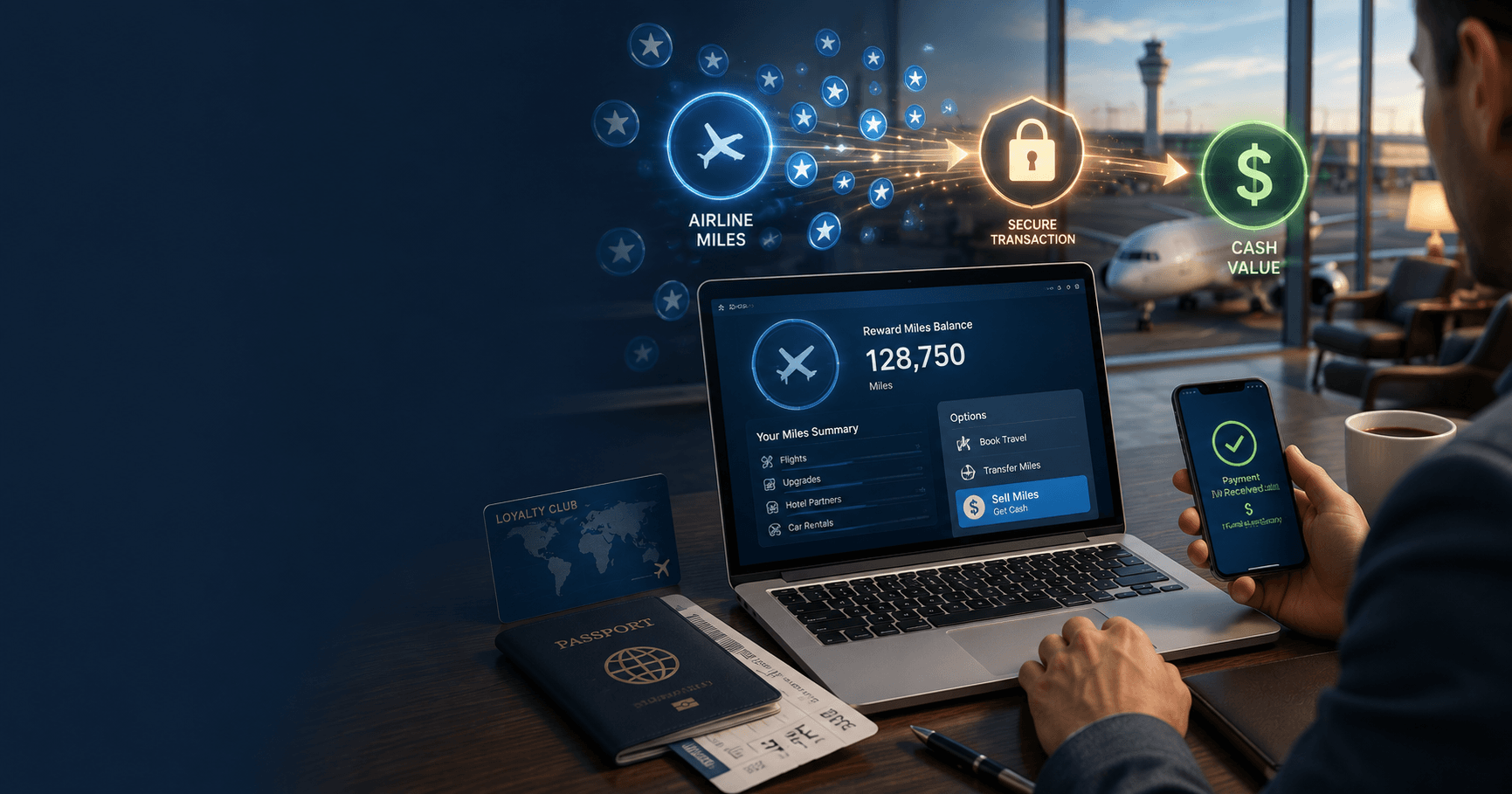
MileageSpot currently describes its airline-mile selling process in three primary steps.
Step 1: Submit Your Information
Select your airline or rewards program and provide the requested information about your balance.
Step 2: Verification
MileageSpot reviews and verifies the information required for the transaction.
Step 3: Get Paid
Once the transaction meets the applicable requirements, payment is processed according to the available payout method.
The website currently states that airline-mile payments are made through PayPal and that same-day payment may be available for qualifying transactions during business hours.
Before You Sell: Final Checklist
Before committing your miles, make sure you can answer each of these questions:
- Have I checked my airline’s current loyalty-program rules?
- Do I understand the possible account consequences?
- Do I know exactly how many miles are involved?
- Is the payout confirmed?
- Is the payment method clear?
- Can I verify the company I am dealing with?
- Do I know what account information will be required?
- Have I protected my email and recovery information?
- Am I comfortable with the transaction after comparing other redemption options?
If any answer is unclear, resolve it before proceeding.
Frequently Asked Questions
Is it safe to sell airline miles?
No transaction is completely risk-free. Selling may also conflict with your airline’s loyalty-program terms. Security risk can be reduced by verifying who you are dealing with, protecting unrelated credentials, understanding the payment process and reviewing account activity.
Is selling airline miles against airline rules?
Many major programs expressly restrict or prohibit unauthorized sale or barter of mileage and awards. United MileagePlus and Delta SkyMiles currently contain explicit restrictions, and American Airlines also restricts unauthorized commercial activity involving AAdvantage mileage and awards.
Can an airline close my frequent flyer account?
Loyalty programs generally reserve enforcement rights when members violate program rules. Potential consequences depend on the specific airline, program and circumstances.
How do I know what my airline miles are worth?
Request a quote based on your specific airline and balance. Do not assume one universal cents-per-mile valuation applies to every loyalty program.
Should I sell miles or use them for travel?
Compare the cash offer with the realistic travel value available to you. If you have an upcoming high-value redemption, using the miles may make more sense. If the balance is unlikely to be used, cash may provide more practical value.
Can I sell credit card points too?
MileageSpot currently lists selling options for several points programs in addition to airline miles, including American Express Membership Rewards, Chase Ultimate Rewards, Hilton, Hyatt and Marriott.
Turn Unused Airline Miles Into Cash
Unused miles only create value when you eventually do something with them.
For some travelers that means booking a flight. For others, converting an unused balance into cash may provide greater flexibility.
Whichever option you choose, make the decision based on the actual value of your rewards, the loyalty program’s current terms and the reliability of the company handling the transaction.
If cash makes more sense for your situation, check your current MileageSpot quote and see what your airline miles may be worth.